 NL
NLHeerenveen, Friesland · Commercial Hub
Why Visit Heerenveen: The Frisian Town That Just Won Olympic Gold Before the Games Even Start
Heerenveen hosts every long track speed skating event of the 2030 Winter Olympics inside Thialf, its legendary ice arena, the first Olympic competition on Dutch soil since 1928. Beyond the ice, visitors find SC Heerenveen football, the royal woods of Oranjewoud, Museum Belvédère and easy access to the Frisian lakes, all in one compact, affordable town.
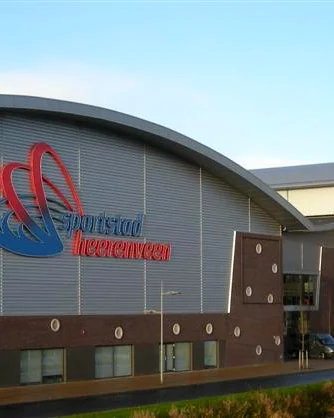
Most towns dream of hosting a single Olympic event. Heerenveen just landed all of them, in one sport, in one building. In June 2026, the organising committee of the French Alps 2030 Winter Olympics confirmed that every long track speed skating race of the Games will be held in Thialf, Heerenveen's legendary ice arena. It is a remarkable arrangement: France has no suitable 400-metre oval, so an entire Olympic discipline moves abroad by deliberate choice. For the Netherlands, it means Olympic competition on home soil for the first time since the Amsterdam Games of 1928.
That is 102 years of waiting, and it ends in a Frisian town of modest size with an outsized sporting soul. So the real question is not why you should visit Heerenveen. It is why you would wait until 2030 to do it.
The town where skating is a religion
Long before the Olympic announcement, skaters already called Thialf the beating heart of their sport. The local ice club was founded back in 1855, making it one of the oldest in the Netherlands, and the arena that grew out of that tradition opened as an outdoor rink in 1967 and became a covered stadium in 1986, according to secondary sources. Thialf itself carries the nickname House of Champions and serves as the home base of the Dutch national skating team.
Here is the part most visitors do not expect: you can skate there yourself. When no competitions are scheduled, Thialf opens its ice to the public. You glide over the same 400-metre oval where world records fall, with a 333-metre track and a small beginners' rink for children alongside it. Skate rental is available on site. A helmet is mandatory on the ice and cut-resistant gloves are strongly advised, so come prepared or rent gear at the arena. Check the Thialf website for public skating hours, which vary with the training and competition calendar.
And if you can, time your visit to a skating event. Thialf on race day is an experience in itself: stands full of orange, brass bands playing between races, and an atmosphere locals proudly describe as a Frisian carnival.
Heerenveen and the 2030 Winter Olympics
The Olympic decision was announced in Lyon on 29 June 2026 by the French organising committee, after the IOC executive board had approved Thialf a week earlier. Six Dutch partners spent roughly two years making the case together: the Ministry of Health, Welfare and Sport, the municipality of Heerenveen, the province of Fryslân, skating federation KNSB, NOC*NSF and Thialf itself. Turin was the other candidate; the French chose Heerenveen.
The plans go beyond the arena. An Olympic Village for the athletes will be built in Heerenveen, with the exact location still to be decided at the time of writing. Expect the town to grow into its Olympic role step by step over the coming years, which makes this a fascinating moment to visit: you can watch an Olympic host town take shape.
Practical tip for planners: accommodation in and around Heerenveen will be in high demand during the Games in February 2030. If experiencing Olympic speed skating live is on your list, start following ticket and travel information early via the official Games channels.
Football with a Frisian heartbeat
Heerenveen's other great love plays its home matches a short distance from Thialf. SC Heerenveen is the football club of the entire province, and a matchday at the Abe Lenstra Stadium is unlike anywhere else in Dutch football: the stands carry the red water-lily leaves of the Frisian flag, the crowd sings the Frisian anthem before kick-off, and since the 2026/27 season the north stand holds the largest standing section in the country, with room for 2,800 supporters. Read our complete Abe Lenstra Stadium visitor guide for tickets, history and matchday tips.
Few places in Europe let you combine top-flight football and world-class skating in a single weekend, within one small town. Heerenveen does.
Oranjewoud: royal woods and modern art
Ten minutes from the stadiums, the pace changes completely. Oranjewoud is a wooded estate landscape on the eastern edge of Heerenveen, historically the country retreat of the Oranje-Nassau family, the Dutch royal house. Today it is a place of lanes, ponds and walking routes, and it explains the town's old nickname of the Frisian Hague, a nod to its stately, green character.
At the heart of it stands Museum Belvédère, opened in 2004 by Queen Beatrix as the first museum for modern and contemporary art in Friesland. The elongated building spans a historic canal, and the museum café between its two wings looks straight out over the estate. The collection centres on artists from Friesland and the northern Netherlands, including the quietly captivating painter Jan Mankes, shown alongside kindred spirits from further afield. The museum is open Tuesday to Sunday from 10:00 to 17:00 and accepts the Dutch Museumkaart. Each spring the surrounding estate also hosts the Oranjewoud Festival, a classical music festival that uses the museum and the landscape as its stage. Read our full Oranjewoud and Museum Belvédère guide.
A town built on peat
Heerenveen presents itself as the oldest peat colony town of the Netherlands, with roots going back to 1551, when noblemen began digging canals to harvest the peat that fuelled the Dutch Golden Age. This origin story is part of local identity and regional history rather than a formally certified record, but you can still read it in the town's layout of straight canals and in the collection of Museum Heerenveen in the town centre, which also tells the story of local football legend Abe Lenstra.
The perfect base for exploring Friesland
Heerenveen sits directly on the A32 motorway and has its own railway station, which makes it an easy and affordable base for the wider region. Within roughly half an hour you reach the Frisian lakes for sailing and watersports, the historic town of Sneek with its famous Waterpoort gate, and Joure. Boaters can pick up the Turfroute, a slow waterway network through the old peat lands. Heerenveen is not a canal-ring postcard town like Amsterdam, and that is exactly the point: you get genuine Frisian life, top-level sport and doorstep nature without the crowds or the prices.
Plan your visit
The short version: come for the ice, stay for everything around it. Skate the Olympic oval at Thialf, feel the Frisian roar at the Abe Lenstra Stadium, walk the royal woods of Oranjewoud, and let Museum Belvédère slow you down. Then, in February 2030, tell everyone you knew this town before the world did.
Browse our guide to things to do in Heerenveen to start planning your visit.
Frequently asked questions
Will the 2030 Winter Olympics really be held in Heerenveen?
Partly, yes. All long track speed skating events of the French Alps 2030 Winter Olympics will take place in Thialf in Heerenveen. The rest of the Games takes place in France. The choice was confirmed by the French organising committee in June 2026.
Why is Olympic speed skating held in the Netherlands and not in France?
France has no suitable 400-metre speed skating oval. The French organising committee therefore chose Thialf in Heerenveen, after also considering Turin. It is the first Olympic competition held in the Netherlands since the Amsterdam Games of 1928.
Can tourists skate at Thialf?
Yes. When no competitions or training blocks are scheduled, Thialf opens the ice to the public, including the 400-metre oval. Skate rental is available, a helmet is mandatory and cut-resistant gloves are advised. Check the Thialf website for current public hours.
What is Heerenveen best known for?
Sport and Frisian identity: the Thialf ice arena, football club SC Heerenveen with the largest standing section in Dutch football, the wooded Oranjewoud estate with Museum Belvédère, and its history as a peat colony town.
Is Heerenveen worth visiting outside the skating season?
Yes. Football season runs from August to May, Oranjewoud and Museum Belvédère are open year-round, and the Frisian lakes are at their best in summer. The Oranjewoud Festival brings classical music to the estate each spring.
How do I get to Heerenveen?
Heerenveen has its own railway station and lies directly on the A32 motorway. From Amsterdam, the journey takes roughly two hours by train or car, making Heerenveen an easy base for exploring Friesland.
More guides to Heerenveen
Sources
- Confirmation of Thialf as sole 2030 Olympic speed skating venue, Olympic Village plans: rijksoverheid.nl, heerenveen.nl, nocnsf.nl (29 June to 1 July 2026)
- IOC executive board approval, first Dutch Olympic competition since 1928: nos.nl (22 June 2026)
- Founding of the Thialf ice club in 1855: anderetijden.nl, sportgeschiedenis.nl (accessed 10 August 2026)
- Thialf arena history and capacity: Wikipedia, secondary source (accessed 10 August 2026)
- Public skating, rules and equipment, race-day atmosphere: thialf.nl, dagjeweg.nl (accessed 10 August 2026)
- Museum Belvédère opening hours, history and Oranjewoud Festival: museumbelvedere.nl, museum.frl, pboranjewoud.nl (accessed 10 August 2026)
- Heerenveen's peat colony origin (1551) is presented as local identity, not a formally certified historical record. Travel time Amsterdam to Heerenveen is an approximation based on the regular timetable; verify current times via ns.nl before travel.
Independent, private initiative with no official affiliation to the municipality of Heerenveen, Thialf, SC Heerenveen, Museum Belvedere, NOC*NSF, the IOC or the Alpes 2030 organizing committee. Names and brands mentioned are the property of their respective owners.